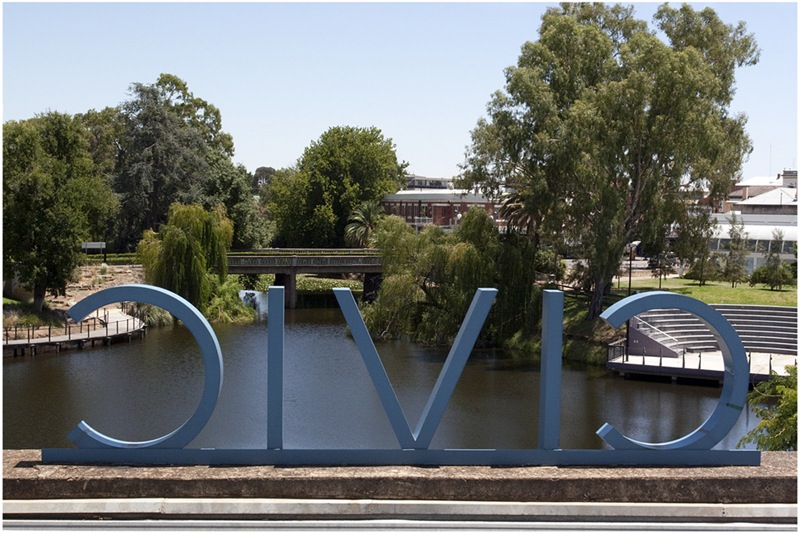
Taken from behind the Civic Theatre sign on the Wagga Wagga Civic Theatre rooftop, this image is not strictly part of the, but rather symbolises the “behind the façade” nature of the project.
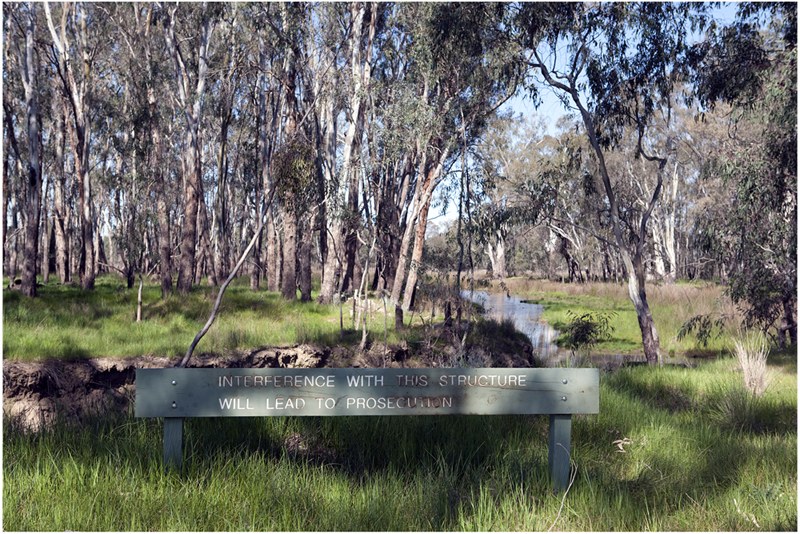
Paradoxically, the only interference here seems to be the sign itself.
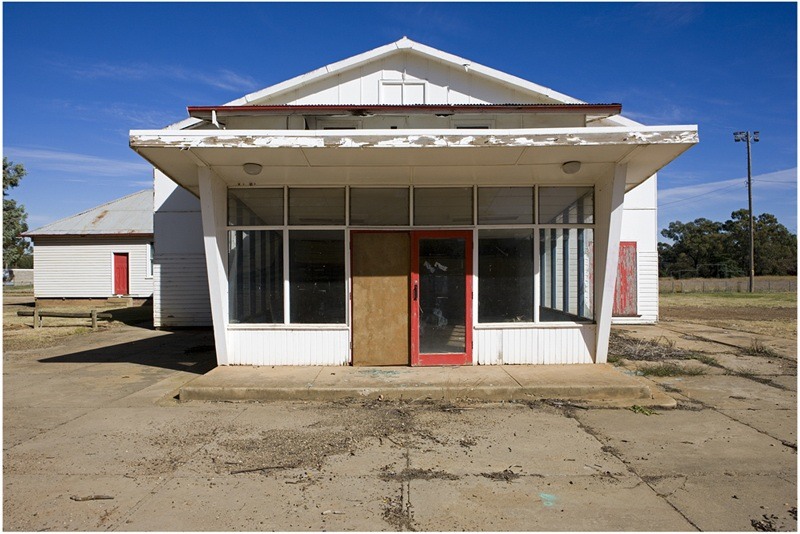
Formerly full of life and importance, and now sadly left behind, this magnificent auditorium stands silent.
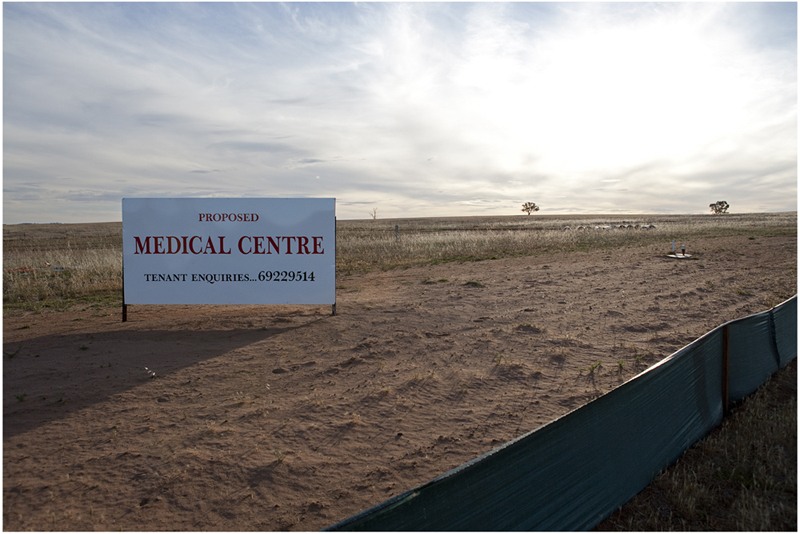
Seeming to be in the middle of nowhere, this promise of good health finds itself already struggling in a landscape where the life cycle of the earth still holds precedence.
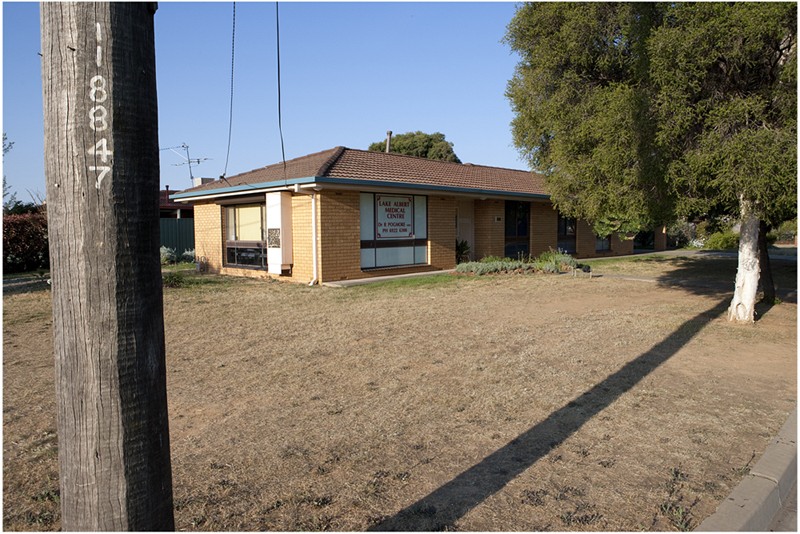
Although established, this building feels isolated and alone, strangely reflecting an appearance of illness rather than wellbeing.
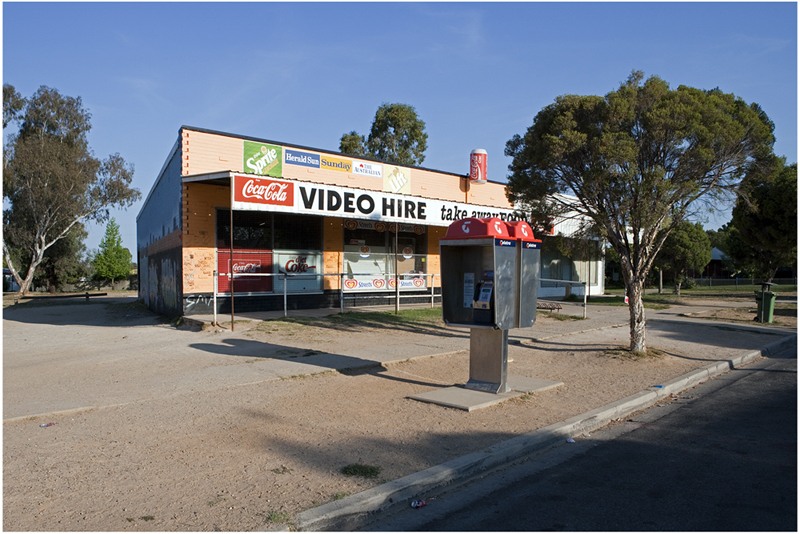
Plastered with graffiti (tags and corporate) and wire mesh windows, it looks more like a building under siege than a convenient stopover for a hot meal. A local said it’s been a long time since you could actually hire a video here.
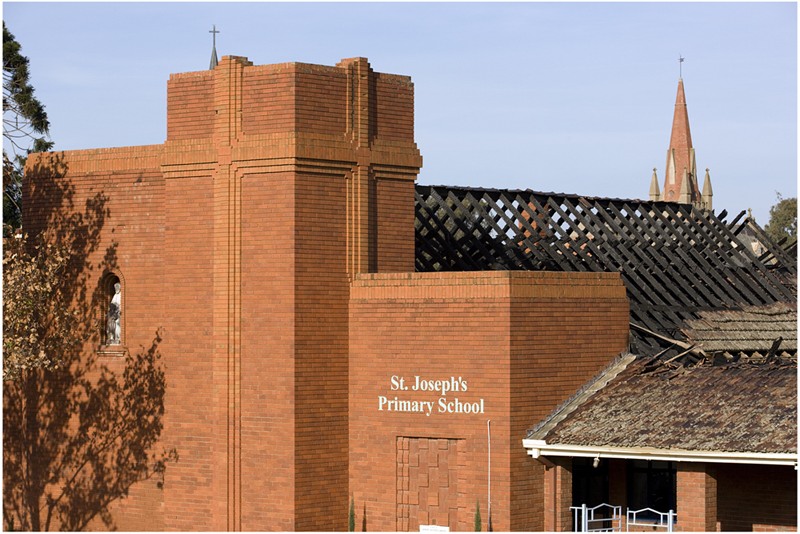
No longer able to shield the frailty behind, only the façade survived an arson attack on this school.
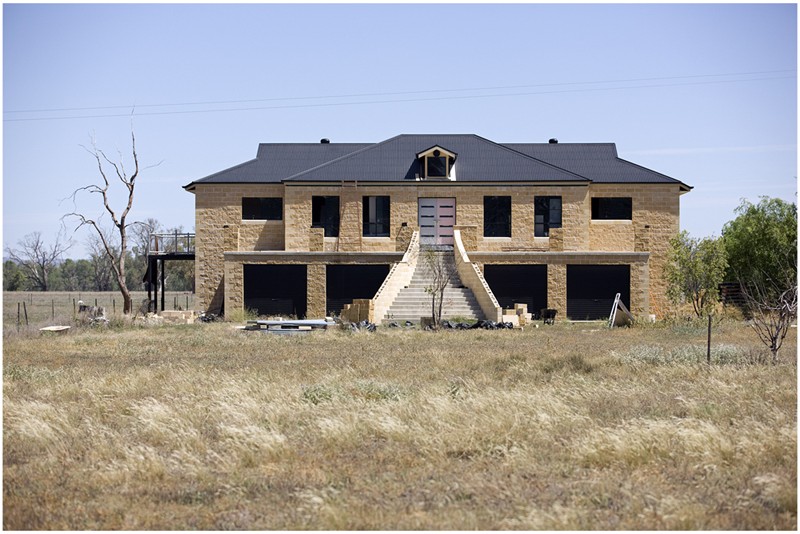
Isolated, this stalled dream home appears to be losing the battle to reconcile with the land from which it protrudes.
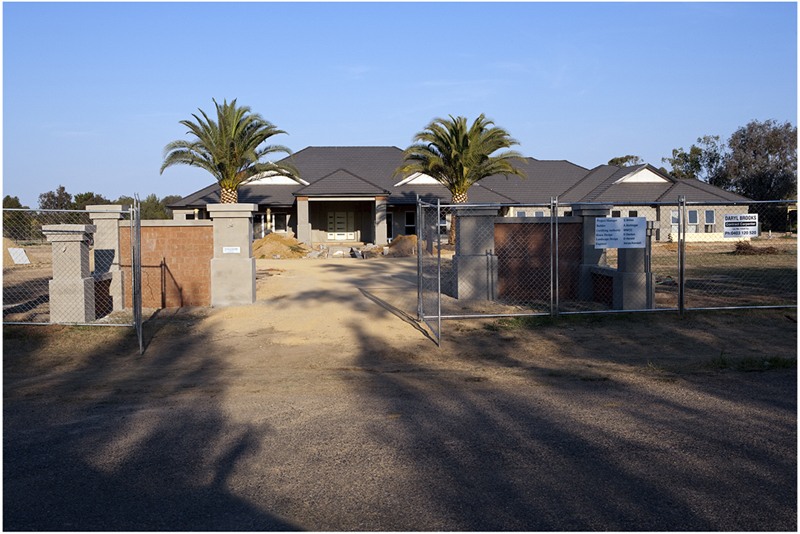
Proof that dreams sometimes come true, but with this often comes a looming fear of loss and a need for secure barriers.
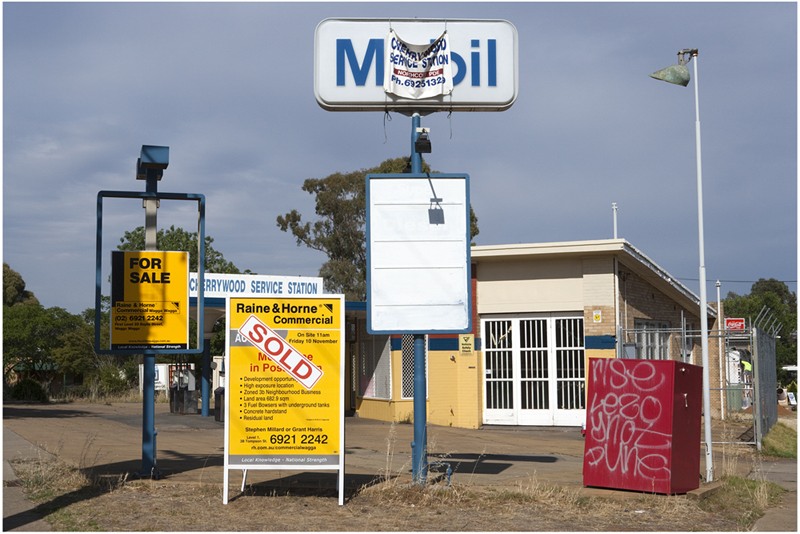
As if to answer so many cries for attention, the simple word “sold” promises renewal.
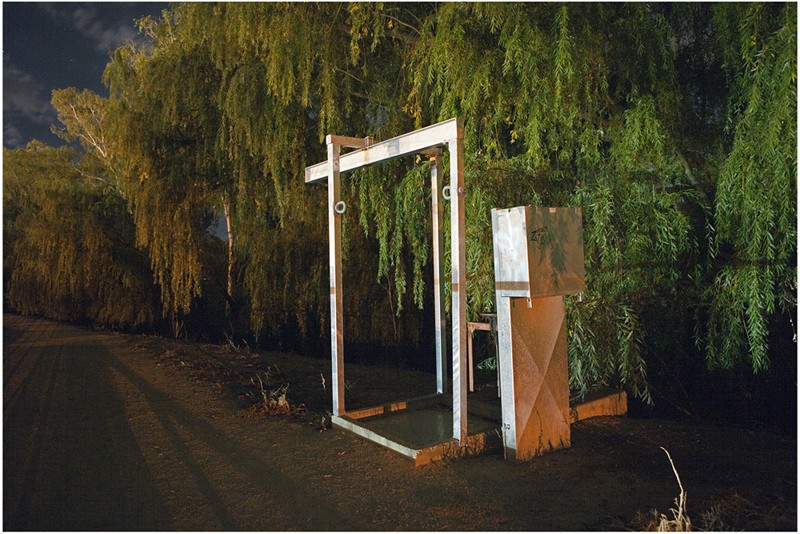
Looking even more eerie and unnatural by night, nobody seems to know what this structure is, except that it must be important.
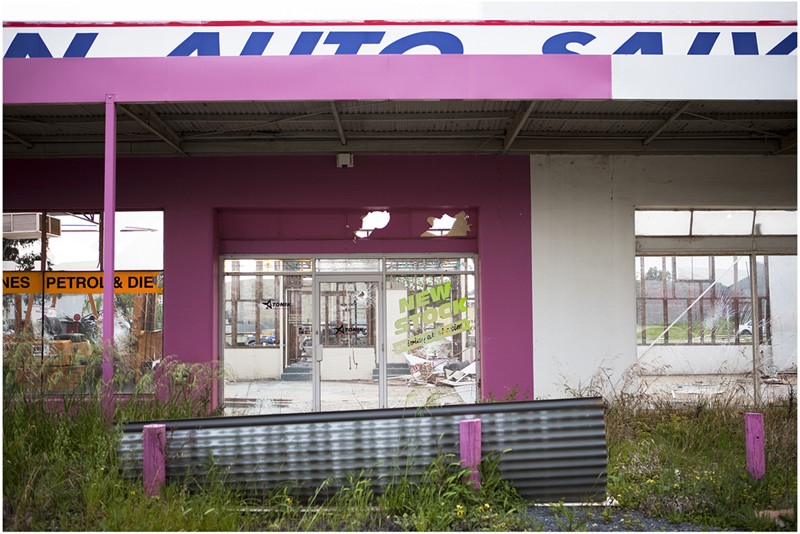
A blind eye is cast to the vandalism of a building scheduled for demolition, as if to provide an outlet for anger and resentment. This seems almost homogeneous with a graffiti wall that legitimises, yet contains and disempowers the message.
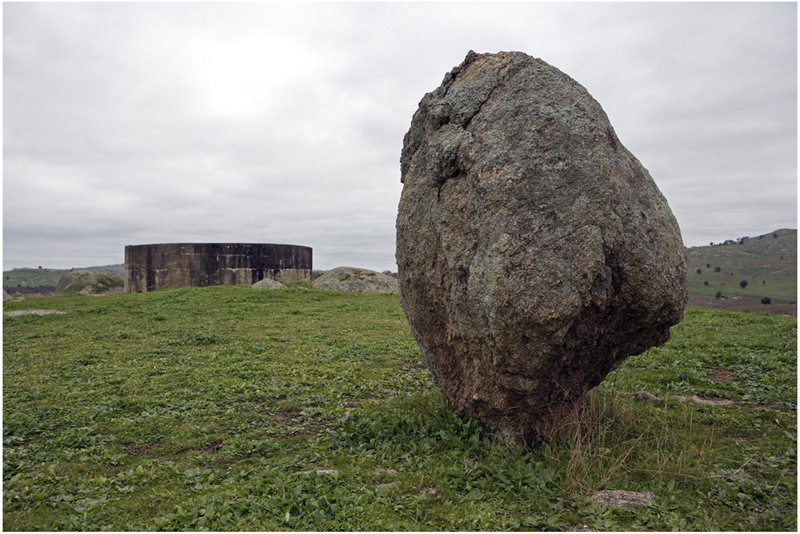
With the nearby Wyangala dam close to empty, for the first time the Lachlan River now struggles to provide much needed water for this tank. Meanwhile, the giant granite rock stands proud, a reminder of the delicate balance we face with nature.
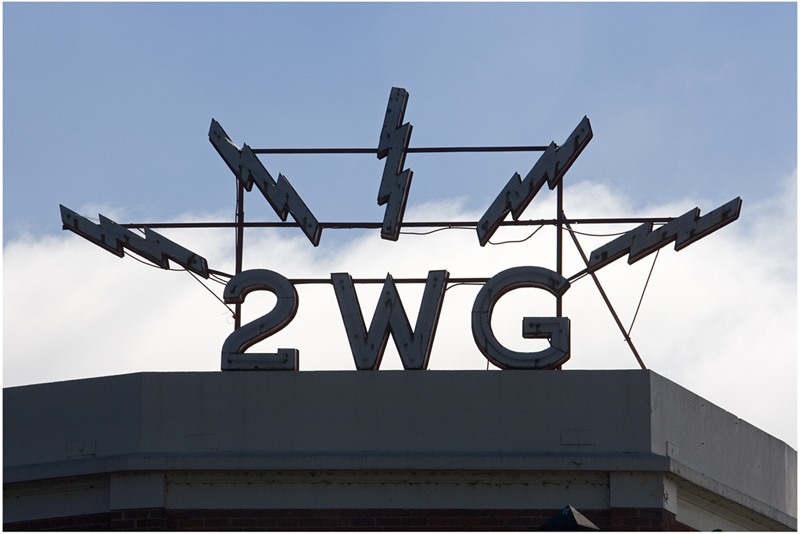
Unlit for almost 20 years, the indelible imprint of the 2WG radio sign on the Wagga Wagga skyline remains an iconic flashback to the heyday of radio.
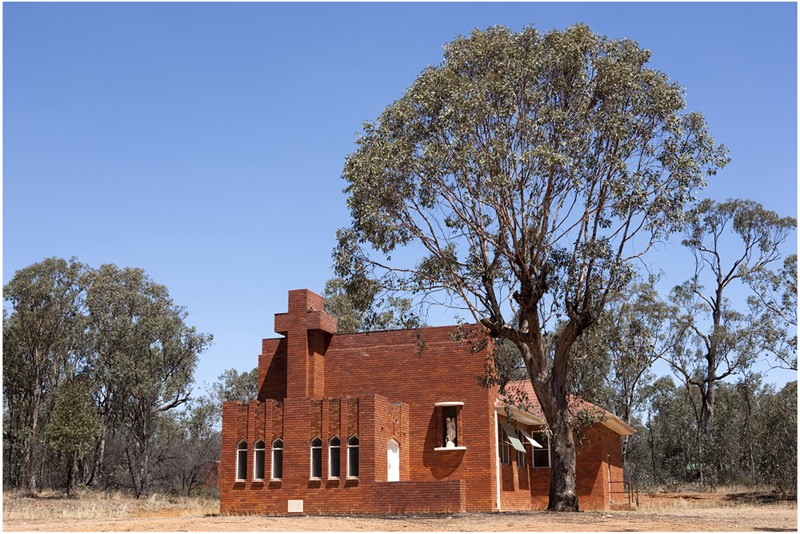
Unshaken by drought, and resistant to the harsh landscape on which it resides, this church appears defiant and indomitable.
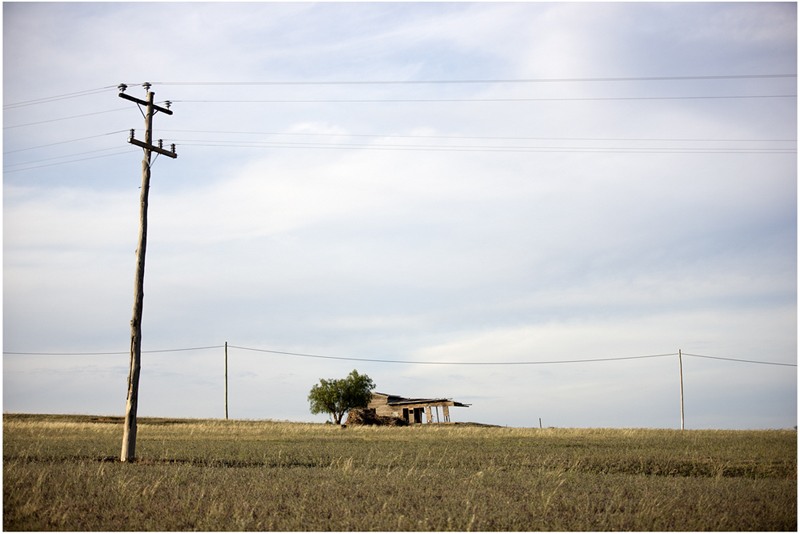
This long defunct dairy is wedged between central Wagga Wagga and encroaching suburban development. A recent windstorm solved any potential historical concerns by flattening it.
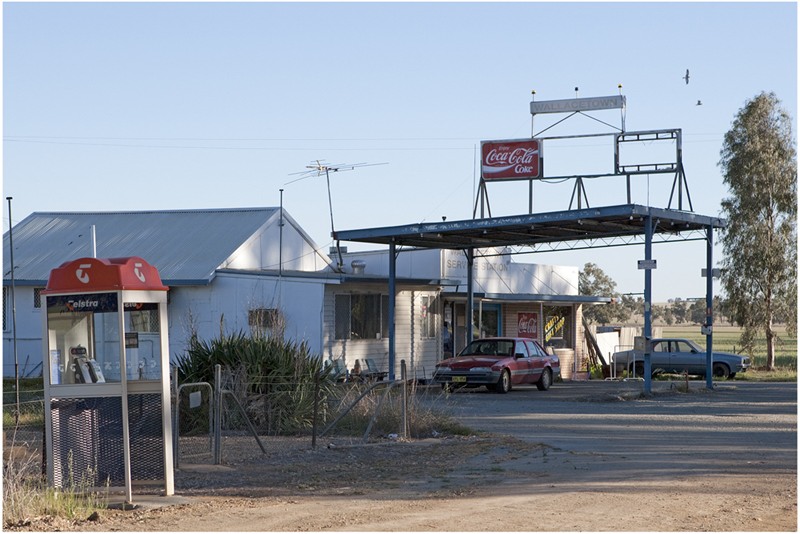
Acting as a kind of accidental epitaph, the Wallacetown road sign simply had the word “closed” affixed across it.
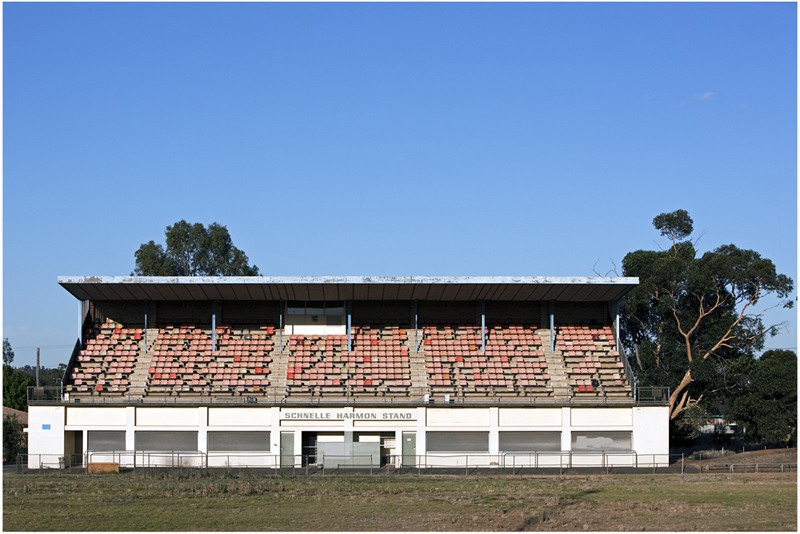
The replaced and missing seats in the grandstand of the now bankrupt Wagga Leagues Club are sadly reminiscent of neglected teeth.
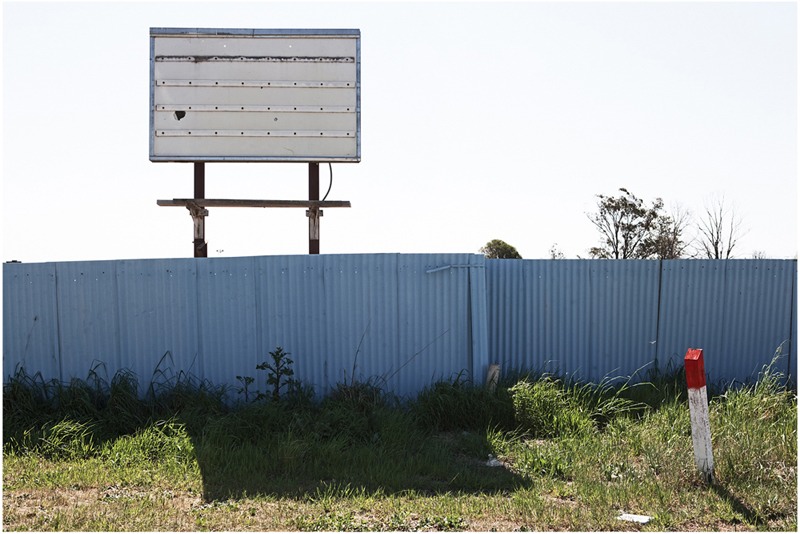
The scoreboard casts a sombre shadow, its purpose no longer relevant.
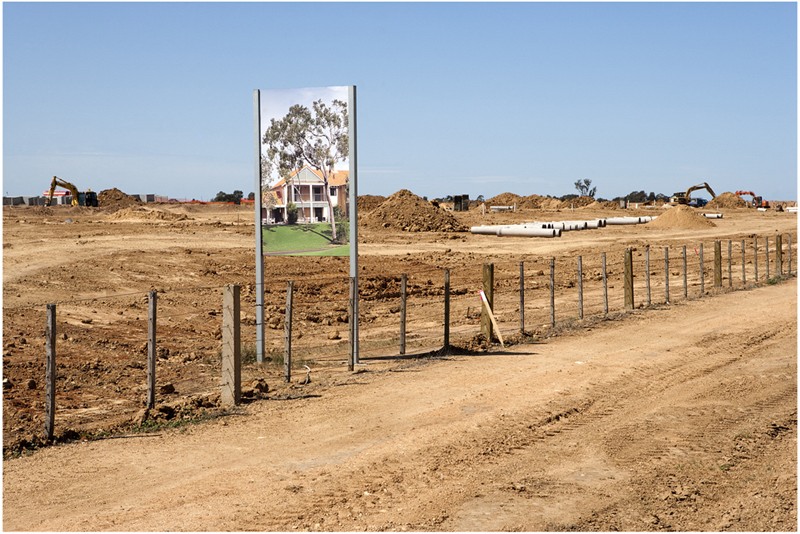
The developers of this large suburban undertaking provide prospective buyers a vision of the promised land.
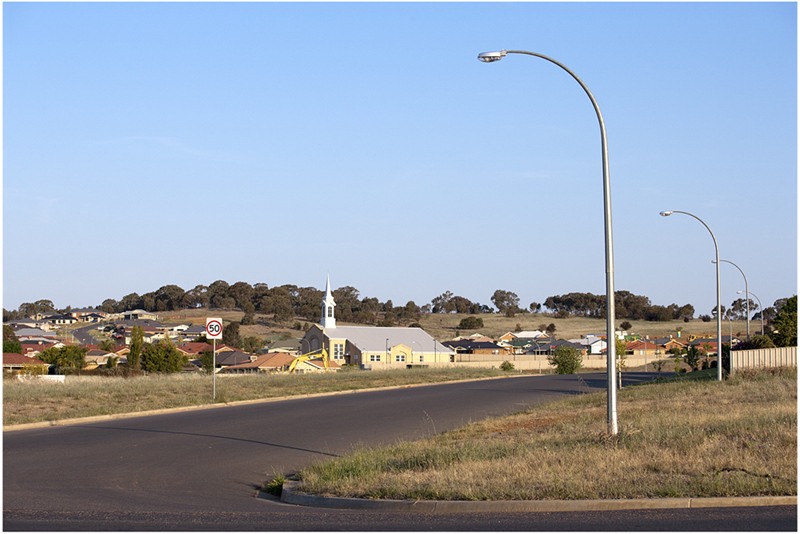
As we’re funnelled down the curvy collector road to this nouveau paradise, a nearby Real Estate sign reminds us, “The Lifestyle Choice is Yours”.
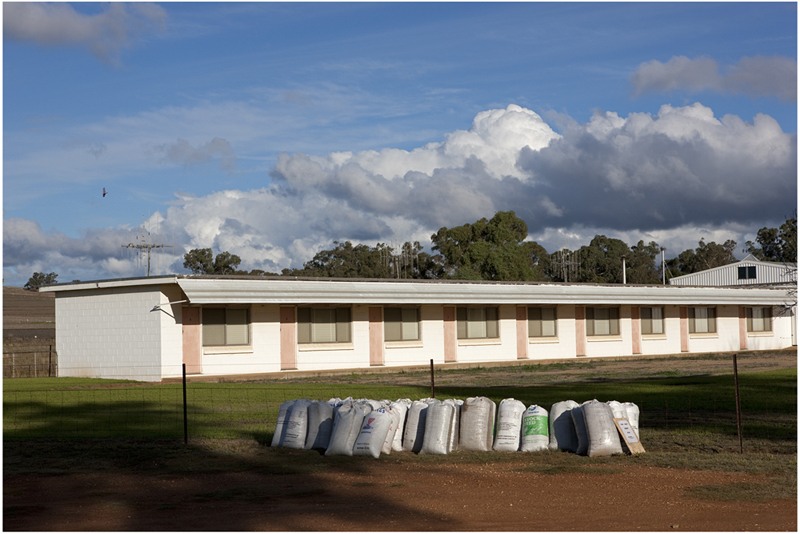
Disused for many years, this motel in the town of Dunedoo provides a backdrop for a local manure seller.
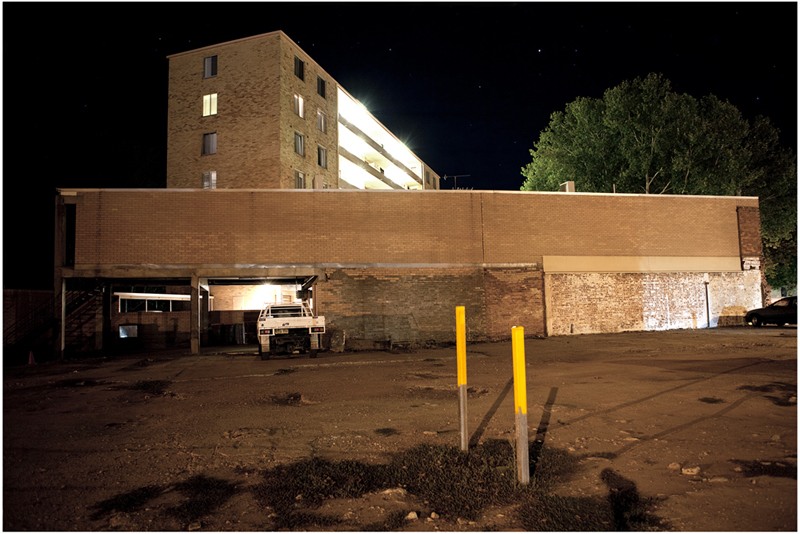
Now up for tender, potential purchasers are encouraged to submit a “lesser design” than the previously approved “maximum possible” one, as this would be seen as having a “lesser impact”, and thus likely to be received favourably by authorities.
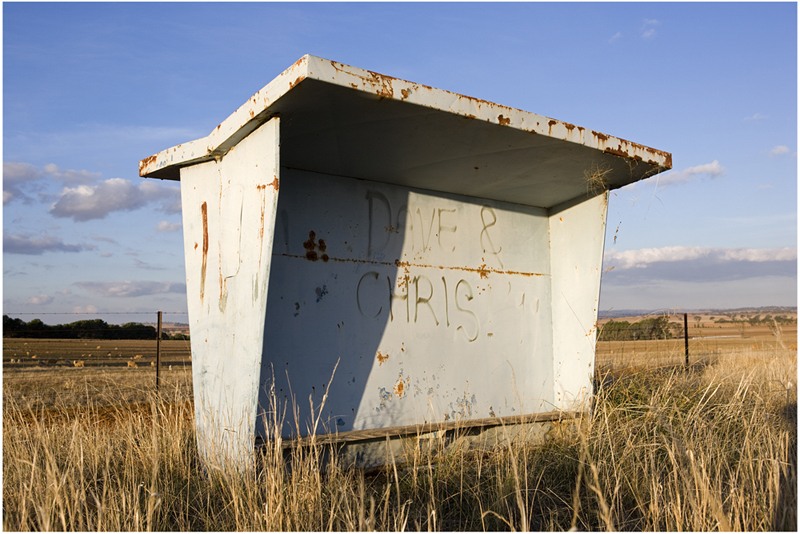
When structures are neglected for long enough they sometimes adopt a serenity akin to an elderly person sitting peacefully in pensive reflection.
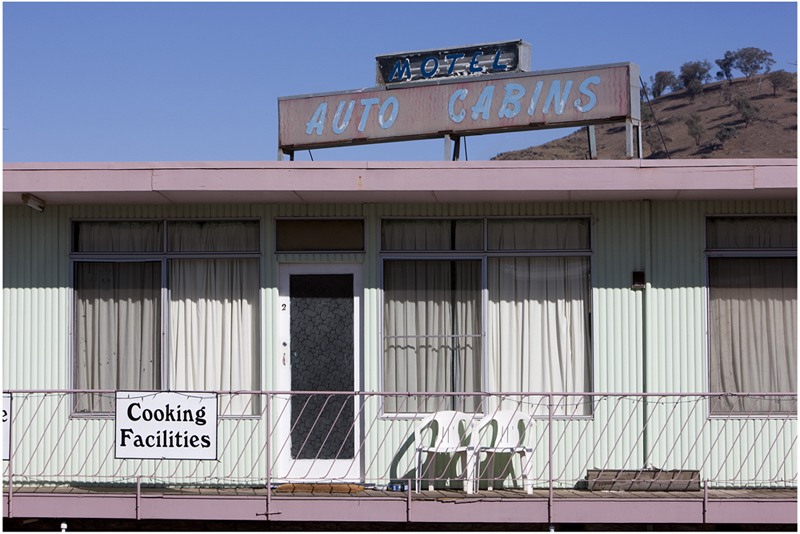
Located in the township of Gundagai, this motel continues to operate, seemingly oblivious to its own decay.
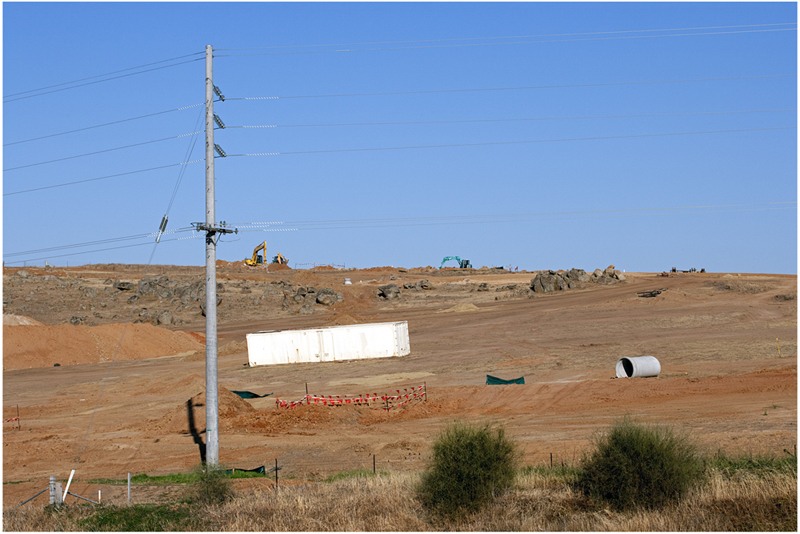
The Australian Dream, the suburban system unfolding before our eyes.
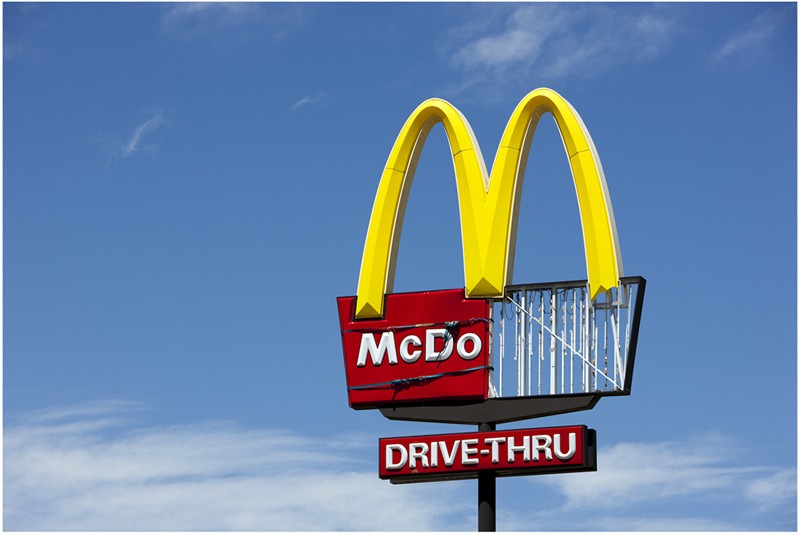
Even huge multi-national corporations occasionally have their armour chinked, and the impact on the skyline is proportional to their normally self-assured composure.
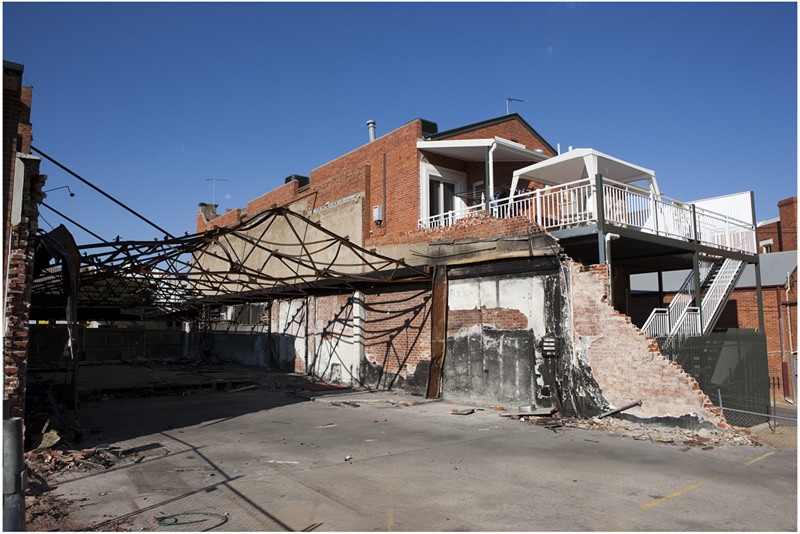
This St Vinnie’s shop burned down under suspicious circumstances last year. After the clean up, there was literally nothing left but the kitchen sink. After what must have been a close shave, it’s life as usual for the neighbours.
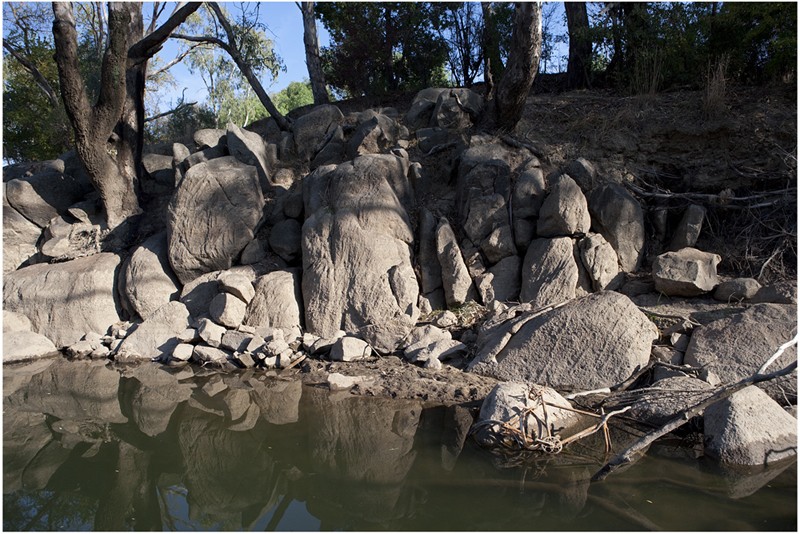
We can’t hide our unwanted junk forever if we just sweep it under the carpet, or throw it in the river.
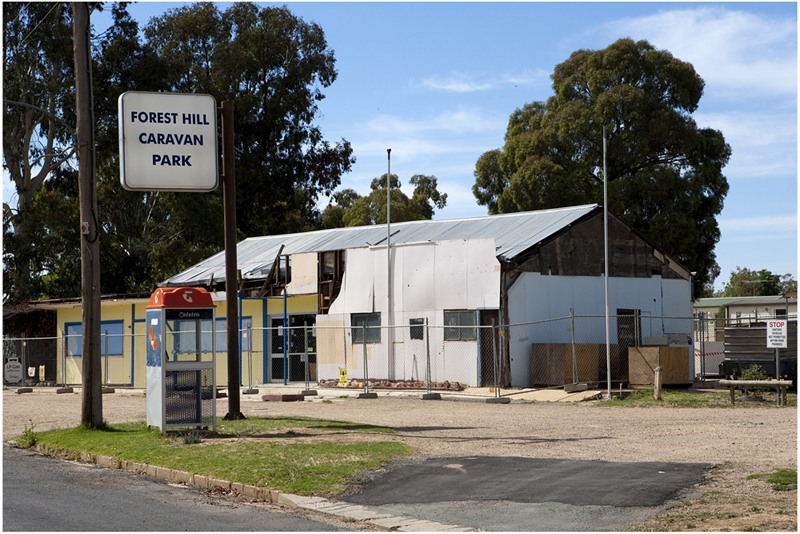
The sign remains, but the building was soon demolished as if to mirror the itinerancy of the park’s clientele.
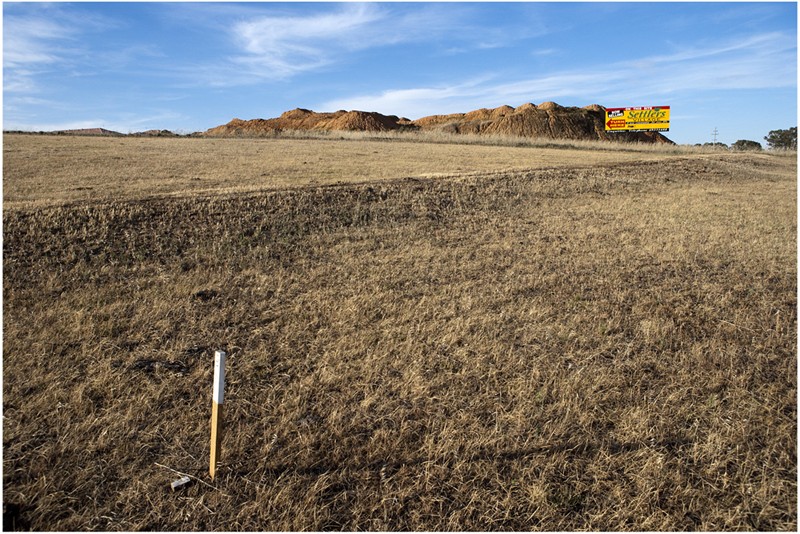
Just as the early colonial settlers pegged out land, “a new community for over 55s” marks its territory. There may not be too many sounds of children playing in these cul-de-sacs.
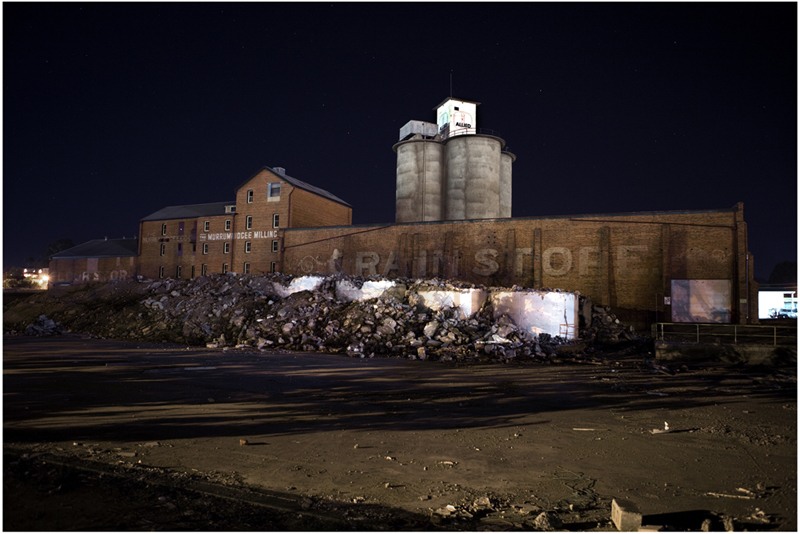
Progress of a major convention and shopping complex appears to have been abandoned shortly after demolition commenced on the old flourmill and grain store.